
When the pilot on a gas water heater won't stay lit, the most common cause is a worn thermocouple, the small sensor that tells the gas valve the pilot is burning. A dirty pilot, a clogged air intake screen or a failing gas control valve can do the same thing, and in most cases one part fixes it without replacing the tank.
The exception is an old tank, or one that is starting to leak. This guide covers what makes a pilot go out in Phoenix Valley homes, what you can safely check before you call, and how to decide between a repair and a new heater.
First, Is It Safe?
If you smell gas near the water heater, do not try to light anything. Leave the house, then call your gas company or 911 from outside. Do not flip light switches or use the garage door opener on your way out.
If there is no gas smell, the heater is safe to look at. Most gas tank heaters have lighting instructions printed on a label on the side of the tank. Follow those exactly. If the pilot lights but goes out again within a few minutes, stop relighting it. Lighting it over and over will not fix the cause, and that is when a call makes more sense.
How Does the Pilot on a Gas Water Heater Work?
A gas tank water heater has three parts that work together at the bottom of the tank:
- The pilot. A small flame that stays lit all the time and lights the main burner when the water needs heat.
- The thermocouple. A thin metal probe that sits in the pilot flame. While it is hot, it sends a tiny electric signal to the gas valve that says the pilot is burning.
- The gas control valve. The box with the dial on the front of the tank. It only lets gas flow to the pilot and burner while it gets that signal.
If the thermocouple stops sending a strong enough signal, the valve shuts the gas off as a safety measure, and the pilot goes out. That is by design. It keeps gas from leaking into your garage or closet when there is no flame to burn it. Some heaters use a thermopile or a flame sensor in place of a thermocouple, but the idea is the same.
What Makes a Pilot Go Out?
Each cause has its own pattern. Here are the ones we see most often in Valley homes.
A worn thermocouple
This is the most common one. Thermocouples sit in a flame every hour of every day, and over the years the tip wears out. The pilot lights, you hold the button, it seems fine, then it goes out as soon as you let go or a few minutes later.
Replacing a thermocouple is a short job and usually costs far less than a new heater. It is one of the most common tank repairs we do.
A dirty pilot or a weak flame
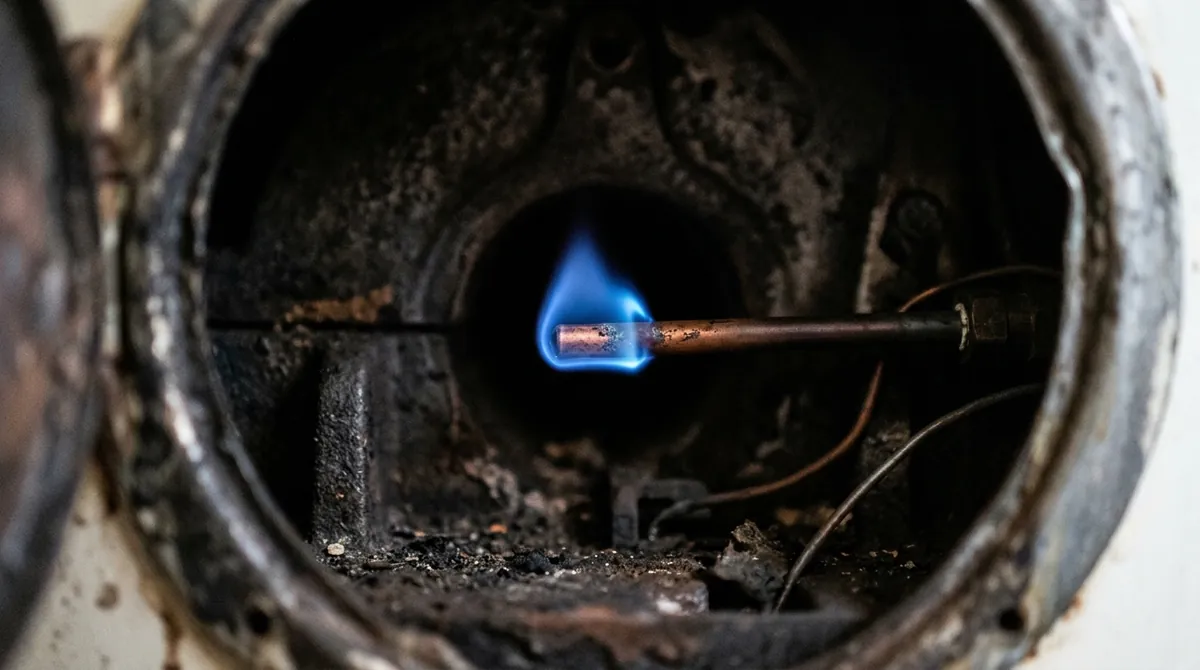
The pilot should burn as a steady blue flame that wraps around the tip of the thermocouple. If the flame is small, yellow or flickering, it may not heat the thermocouple enough to keep the gas valve open. Dust, rust flakes or a partly blocked pilot opening are the usual reasons.
A clogged air intake or flame arrestor screen
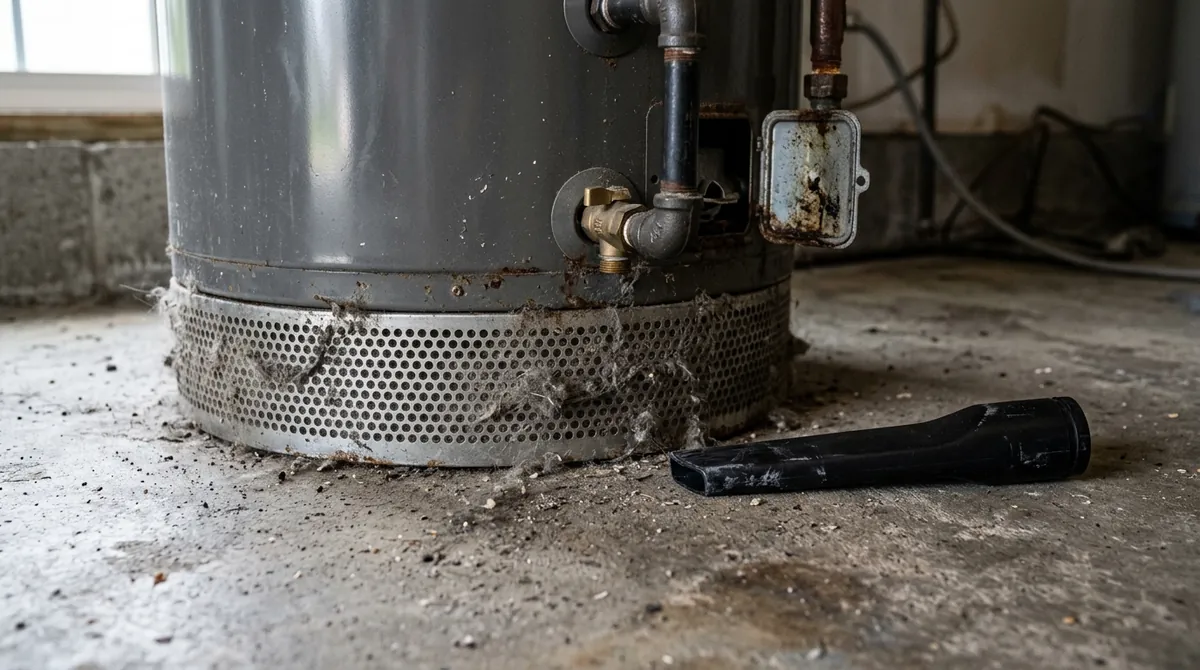
Most gas water heaters built in recent decades have a sealed burner chamber with a screen or vents at the bottom that let air in. In a dusty garage, lint, pet hair and desert dust can coat that screen. The burner then starves for air, the flame goes weak, and the pilot goes out.
Many newer tanks also have a flammable vapor sensor. If it trips, the heater may shut down and will not relight until the cause is fixed and the part is checked. Paint cans, gas cans or cleaning products stored near the heater are a common trigger, so keep them well away from it.
Drafts and venting problems
A strong draft across the bottom of the tank can blow a small pilot out. A garage door that opens right beside the heater, or an open window in a closet, can do it. So can a vent pipe that is blocked or disconnected, because the exhaust has nowhere to go and the flame struggles.
If the pilot goes out mostly on windy days, or right when the garage door opens, mention that when you call. It points us straight at the cause.
The gas control valve
If the pilot will not light at all, or the dial and button do nothing, the gas control valve may have failed. This part costs more than a thermocouple, so on an older tank it is where the repair or replace question starts.
The gas supply
Check that the yellow gas line valve to the heater is fully open, with the handle in line with the pipe. If your stove or other gas appliances are not working either, the problem is the gas supply to the house, not the water heater. Call your gas company.
What Can You Check Before You Call?
Here is what most homeowners can safely do:
- Make sure there is no gas smell. If there is, leave and call from outside.
- Confirm the gas valve on the line to the heater is open.
- Look at the screen or vents at the base of the tank. If they are covered in dust, turn the heater off and gently vacuum the outside of the screen. Do not take anything apart.
- Move anything stored near the heater, especially paint, fuel or chemicals.
- Relight the pilot once, following the label on the tank.
- If it goes out again, note how long it stayed lit and what the flame looked like.
That last step helps a lot. When you call or text Tyler or Cameron, tell them the brand, roughly how old the heater is and what happened when you relit it. Many times that is enough to know which part to bring.
Should You Repair or Replace the Water Heater?
A pilot that will not stay lit is usually a part problem, not a tank problem. The tank itself is what decides whether a repair is worth it. The Air-Conditioning, Heating, and Refrigeration Institute notes that "most water heaters have an expected service life of 10 to 13 years" (AHRI). In Phoenix Valley hard water, a tank that was never flushed can wear out sooner.
Repair usually makes sense when:
- The tank is well inside that range and is not leaking.
- The problem is a thermocouple, a dirty pilot or a clogged screen.
- There is no heavy rust on the tank, the fittings or the floor below it.
Replacement may make more sense when:
- The tank is past 10 years old and the gas control valve has failed.
- Water is leaking from the tank body itself. That is the one failure a part cannot fix.
- The heater has needed several repairs in a short time.
- You were already thinking about a different setup, such as tankless or a heat pump.
Before you pay for any part, we check the tank's health first: rust, seepage at the base and heavy sediment. If the tank is near the end, we will say so, and you can decide whether a repair to buy time or a replacement suits you better. Many heaters do not need replacing, and sometimes a simple repair is the better call.
If replacement is on the table, our guides to signs you need water heater replacement in Phoenix and what affects water heater replacement cost in Phoenix cover the next steps.
What Happens on a Pilot Repair Visit?
Our tank water heater repair services follow the same steps every time:
- Test the part, not the whole tank. We check the pilot, the thermocouple and the gas control valve to pin down exactly which one failed.
- Check the tank's health. We look for rust, base seepage and heavy sediment, so you know the tank deserves a new part.
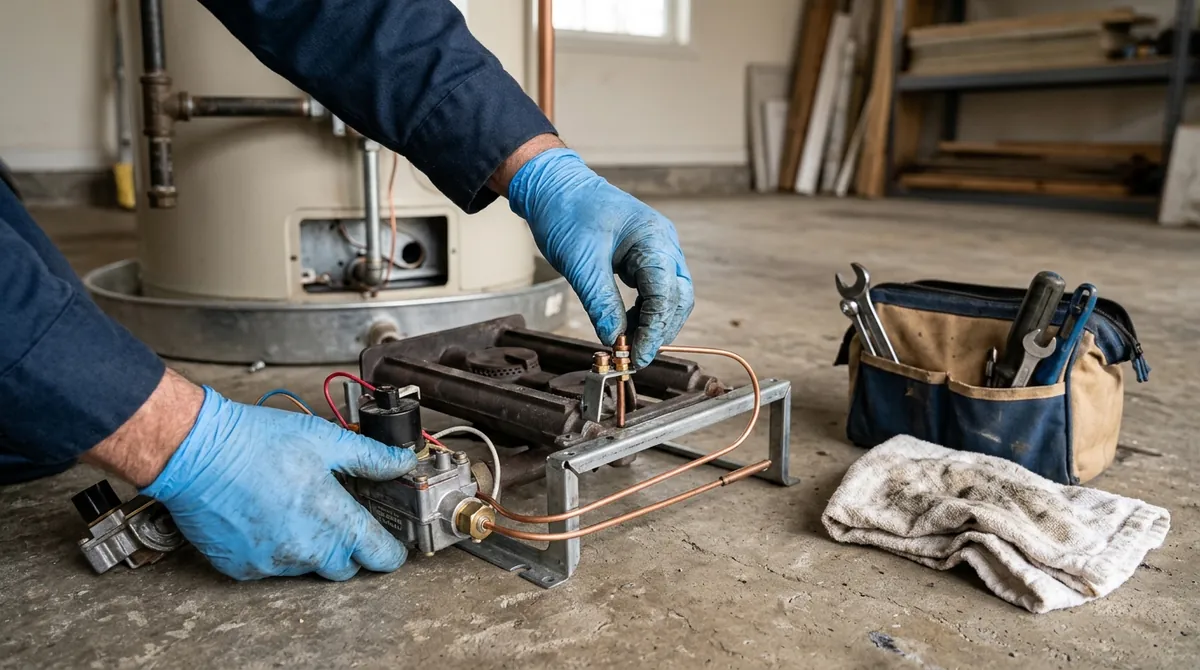
- Replace the worn part. Tyler or Cameron swaps the part, relights the pilot and watches the burner run through a full cycle.
- Check the safety parts. We check the relief valve and the venting before we leave.
A single part swap like a thermocouple usually takes one visit. Every repair comes with our 2-year workmanship warranty, and you get clear pricing before any work starts.
How Can You Keep the Pilot Lit?
A few habits cut down on pilot problems:
- Keep the area around the heater clear. Give the base of the tank space to breathe, and store chemicals and fuel elsewhere.
- Keep the intake screen clean. A quick vacuum of the outside of the screen a couple of times a year helps in a dusty garage.
- Flush the tank every year. Sediment from hard water makes the burner work harder. Our water heater maintenance services include a flush and a check of the pilot and burner.
- Do not ignore a weak or yellow flame. It is an early warning, and it is easier to fix before the pilot starts going out.
Frequently Asked Questions
Why does my water heater pilot light keep going out?
The most common reason is a worn thermocouple that no longer tells the gas valve the pilot is lit. A dirty pilot, a clogged air intake screen, a draft or a failing gas control valve can also cause it. If it lights and then goes out within minutes, the thermocouple is the first thing we test.
Is it safe to keep relighting a water heater pilot?
Relighting once, following the label on the tank, is fine if there is no gas smell. If it keeps going out, stop. Something is making the safety system shut the gas off, and relighting will not fix it. If you ever smell gas, leave the house and call your gas company from outside.
How long does it take to fix a pilot that won't stay lit?
A thermocouple or pilot cleaning is usually done in one visit. A gas control valve takes longer because the tank has to be drained down. We tell you which one it is and what it involves before we start.
Should I replace a 12-year-old water heater if the pilot won't stay lit?
Not always. If the tank is dry, has little rust and only needs a thermocouple, a repair can still make sense. If the gas control valve has failed or the tank shows signs of leaking, replacement is often the better value. We will explain both options so you can decide.
Talk to the Owners About Your Water Heater
Tyler and Cameron repair gas and electric tank water heaters for homeowners across Phoenix and the Phoenix Valley, Monday to Saturday, 8 AM to 5 PM. We find the part that failed, fix that, and tell you honestly how much life the tank has left.
If you live in Phoenix, see our page on tank water heater repair in Phoenix. Pilot still going out? Call or text (602) 901-6418 with the brand and age of your heater for a free quote, or book a free water heater inspection. No pressure and no obligation, from our family to yours.