
A tank water heater is usually the better choice in Phoenix if you want the simplest, lowest-cost swap. A tankless heater makes more sense if you want endless hot water, have the gas line, venting or power to support it, and will keep up with yearly descaling in our hard water.
Neither one is right for every home. The rest of this guide walks through the real differences, so you can pick the one that fits how your family uses hot water.
How Do Tank and Tankless Water Heaters Work?
A tank water heater keeps a set amount of water hot all day. Most homes have a 40 to 80 gallon tank. When you run a shower, hot water leaves the top and cold water refills the bottom.
A tankless water heater has no tank. It heats water only when you open a hot tap. Water flows through a heat exchanger, a set of hot coils, and comes out at the set temperature.
What does that mean day to day?
- Tank: hot water is ready right away, but it can run out after a few long showers.
- Tankless: hot water does not run out, but the unit can only heat so many gallons per minute at once.
- Tank: it reheats water around the clock, even when nobody is home.
- Tankless: it sits idle until you need it.
Which One Gives You More Hot Water?
This is the question most Phoenix families ask first. The answer depends on whether you run out of hot water or run short on flow.
A tank runs out. If four people shower back to back, the last one may get a cool rinse. A bigger tank helps, but it takes up more room in the garage.
A tankless unit never runs out, but it has a flow limit. If two showers and the dishwasher run at once, a unit that is too small can struggle. That is why sizing matters so much.
How is a tankless heater sized?
We size by flow rate, not by gallons stored. We ask which fixtures you run at the same time, then match a unit that can keep up. A good fit means you do not pay for more heater than your home needs.
Phoenix has one advantage here. Our incoming water is warmer than in colder states for much of the year, so a tankless unit has less work to do. In winter the water comes in cooler, and sizing should plan for that.
What Does Each Install Involve?
Swapping a tank for a tank is the simpler job. Most standard installs take 2 to 4 hours. The new unit usually fits the same spot and uses the same gas line or circuit.
Switching from a tank to tankless is a bigger change. Tankless can take longer depending on venting, gas or electrical work. Here is what we check before we quote it.
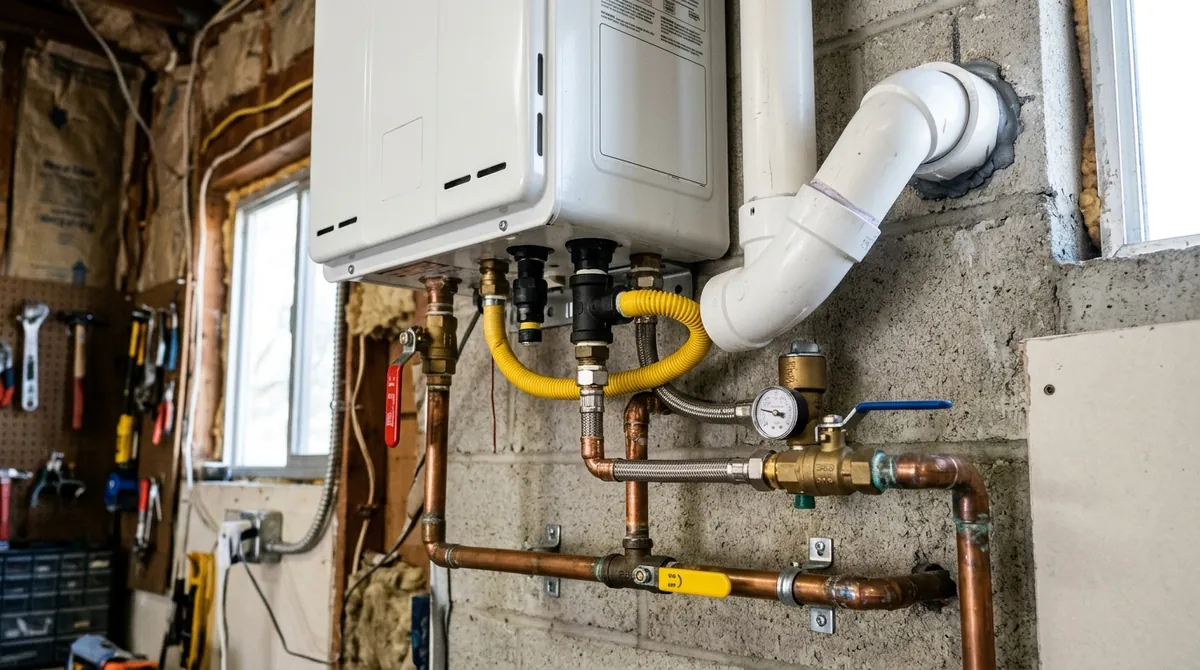
What a tank-to-tankless switch can need
- Gas line size. A gas tankless unit needs a lot of gas when it fires. Many older Phoenix homes have a gas line sized for a tank.
- Venting. Gas tankless units need their own vent, which may differ from the old tank vent.
- Electrical. Electric tankless units can need much more power than a tank, so the panel matters.
- Mounting spot. Tankless units hang on a wall, which frees up floor space in the garage.
- Permits. The city may require a permit. We will tell you if yours does.
Our tankless water heater installation services page covers each of these steps in more detail.
How Does Phoenix Hard Water Affect Each Type?
Phoenix-area water is hard. It carries minerals that build up inside any water heater. How that buildup shows up depends on the type.
In a tank, minerals settle to the bottom as sediment. You may hear popping or rumbling, and the heater has to work harder. An annual flush clears most of it.
In a tankless unit, minerals coat the heat exchanger as scale. Scale can cut flow, trigger error codes and shorten the unit's life. Descaling flushes a mild solution through the unit to dissolve it.
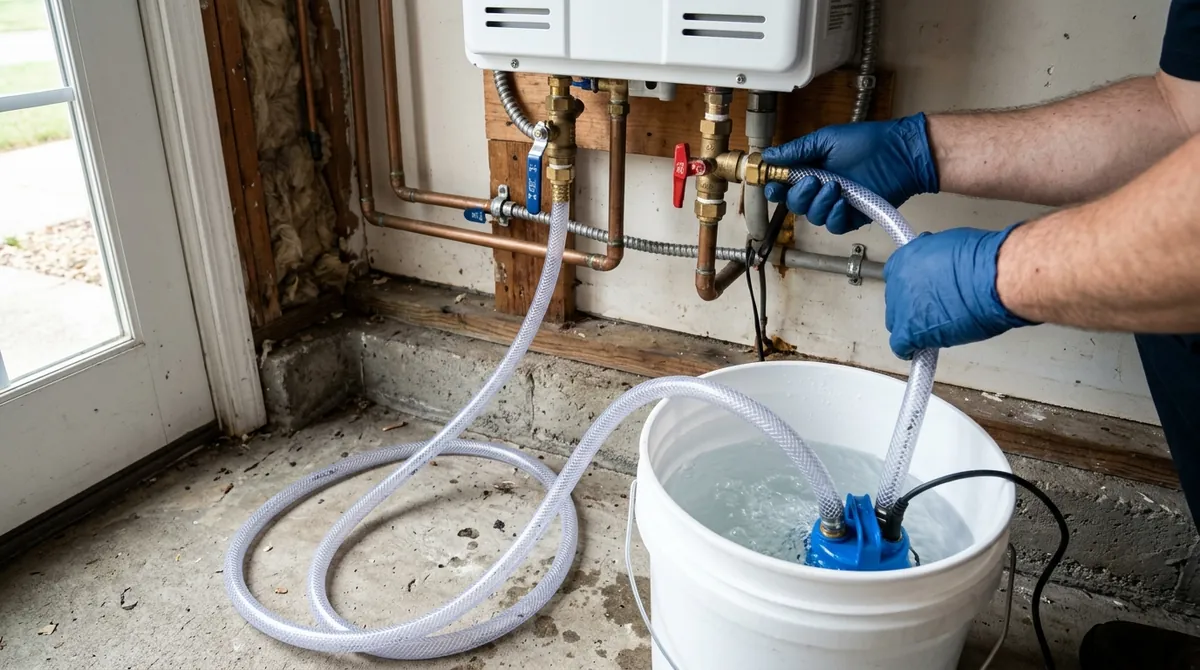
What upkeep does each need?
- Tank: a yearly flush, inspection and an anode rod check. Ask about a powered anode rod, which does not dissolve like a standard rod.
- Tankless: yearly descaling with an eco-friendly solution, plus cleaning the built-in air filter and water filter.
We recommend annual maintenance for both types in the Phoenix metro because of hard water. Our water heater maintenance services page explains what each visit covers.
Which One Lasts Longer?
Tankless units are built to last longer than tanks. ENERGY STAR says certified gas tankless models "have a life expectancy of 20 years, much longer than any conventional tank-type water heater" (ENERGY STAR).
That long life assumes good care. In Phoenix, a tankless unit that never gets descaled will not reach it. A tank heater that gets a yearly flush and anode check also lasts longer than one that is ignored.
A tank that is 10 years old or more and showing signs of trouble is often worth replacing. If yours is in that range, our guide to signs you need water heater replacement in Phoenix can help.
How Do the Costs Compare?
We do not post flat prices, because every home is different. What we can tell you is what moves the number for each type.
What drives the cost of a tank swap?
- Tank size and fuel, gas or electric.
- Any code upgrades, such as an expansion tank or new flex lines.
- Haul-away of the old unit.
What drives the cost of going tankless?
- The unit itself, which usually costs more up front than a tank.
- Gas line upsizing, new venting or electrical work, if your home needs it.
- Ongoing descaling, which keeps the unit running well.
A tankless unit uses energy only when you run hot water, so running costs can be lower over time. Whether that pays back depends on your home and your habits. Ask your utility, APS, SRP or Southwest Gas, about current rebates before you decide.
For a deeper look at pricing, read our water heater replacement cost in Phoenix guide.
Which One Fits Your Home?
Here is the simple version. Think about who lives in your home and how you use hot water.
A tank is often the better fit if:
- You want the quickest, simplest replacement.
- Your current gas line, vent and circuit are set up for a tank.
- Your household is small or does not run many taps at once.
- You would rather keep upfront cost lower.
Tankless is often the better fit if:
- Your family runs out of hot water with a tank.
- You want to free up floor space in the garage.
- Your home can support the gas, venting or power it needs.
- You plan to stay in the home long enough to enjoy the longer life.
- You will keep up with yearly descaling.
Still not sure? A heat pump water heater is a third option for some Phoenix homes. Our heat pump water heater services page explains when it makes sense.
Frequently Asked Questions
Is tankless worth it in Phoenix?
It can be. Tankless makes the most sense for families who run out of hot water, want floor space back and will descale yearly. If your home needs a new gas line, venting and power to make the switch, a new tank may be the better value. We will tell you honestly which fits.
Can I switch from a tank to tankless?
Yes, most homes can switch. The work depends on your gas line size, venting and electrical panel. Some homes need only small changes, while others need a new gas line or circuit. We check all of it first and explain what your home needs before you decide.
Does hard water damage tankless water heaters?
Hard water builds scale on the heat exchanger inside a tankless unit. Over time, scale cuts flow, causes error codes and shortens its life. Yearly descaling with a mild solution dissolves the buildup. In the Phoenix Valley, we recommend descaling every year to keep the unit working well.
How long does a tankless install take?
A standard tank swap takes 2 to 4 hours. A switch to tankless can take longer, depending on how much gas, venting or electrical work your home needs. We will give you a clear idea of timing and price before any work starts, so there are no surprises on the day.
Talk It Through With the Owners
Not sure which way to go? Tyler and Cameron will talk through your hot water use, check your gas line, venting and power, and give you an honest answer. Sometimes that means keeping your tank and fixing it instead.
We serve homeowners across the Phoenix Valley, Monday to Saturday, 8 AM to 5 PM. If you live in Phoenix, see our page on tankless water heater installation in Phoenix.
Call or text (602) 901-6418 for a free quote by phone, or book a free water heater inspection. No pressure and no obligation, from our family to yours.