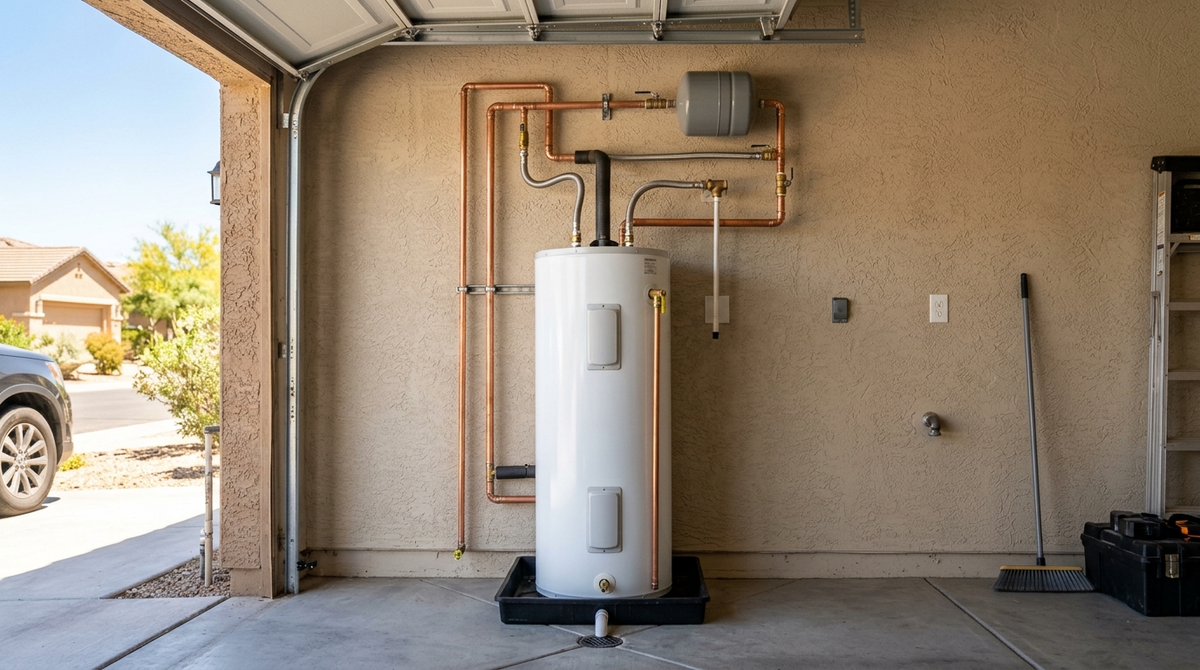
For most Phoenix homes, the best choice between a gas and an electric water heater is the one your house is already set up for. Gas tanks heat water faster and suit bigger households, while electric tanks are simpler to install, need no venting and fit in more places.
Switching from one to the other can make sense, but it adds work: a new circuit for electric, or a gas line and venting for gas. This guide compares the two side by side for Valley homes, so you can decide before you replace your heater.
How Do Gas and Electric Water Heaters Work?
Both are tank water heaters. They store hot water and keep it at the temperature you set. The difference is how they heat it.
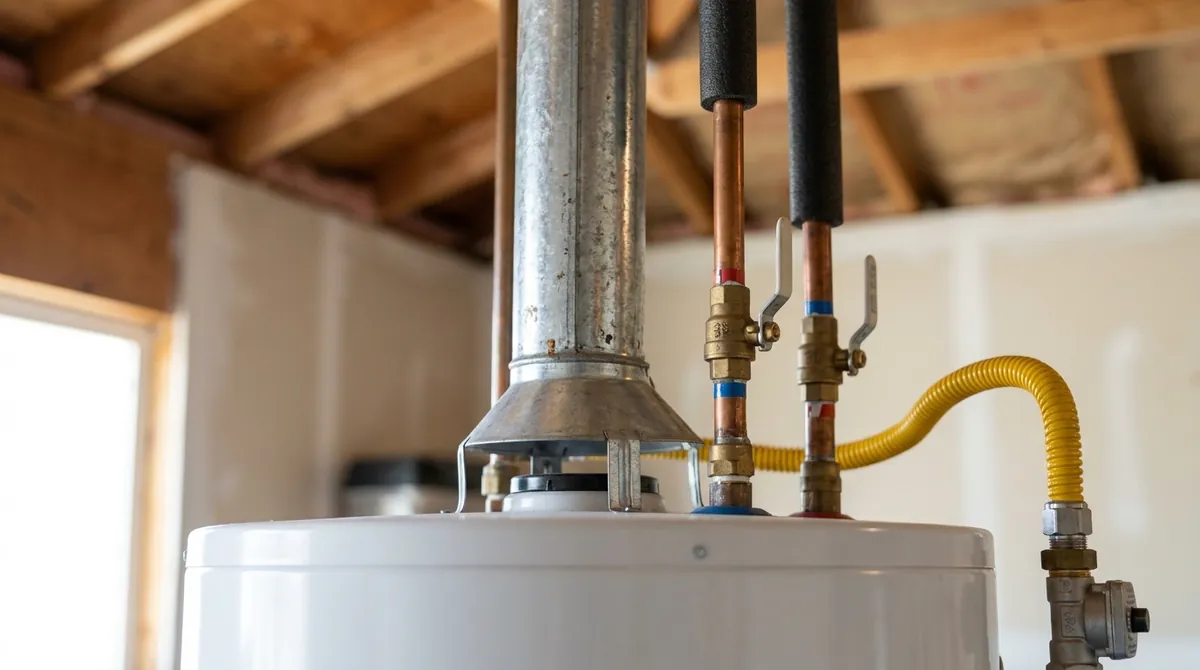
A gas water heater has a burner under the tank. A pilot or an electronic igniter lights it, and a gas control valve on the front of the tank runs it. Exhaust leaves through a vent pipe to the outside.
An electric water heater has heating elements inside the tank, metal rods that heat the water directly. Most have two, an upper and a lower element, each with its own thermostat. There is no flame and no exhaust, so there is no vent.
A third option is worth knowing about. A heat pump water heater is an electric heater that pulls heat from the surrounding air instead of making it all with elements. We cover it below, because Phoenix garages suit it well.
Which One Gives You More Hot Water?
Tank size matters most, but how fast the heater recovers matters too. Recovery is how quickly it heats a fresh tank of cold water after you use it up.
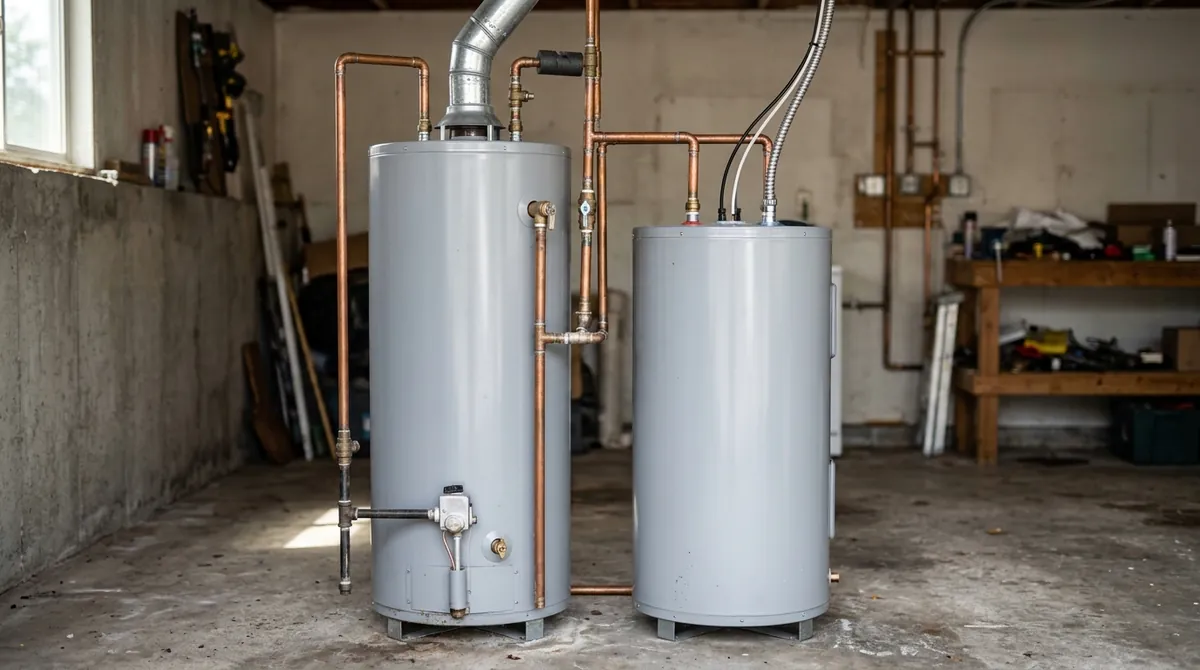
Gas heaters generally recover faster than standard electric ones of the same size. The burner puts more heat into the water each hour than electric elements can. That shows up when several people shower back to back, or when the dishwasher and laundry run in the same hour.
An electric tank can still be the right fit. If your household is small, or your hot water use is spread through the day, you may never notice the slower recovery. If it is a concern, a larger electric tank can make up some of the difference. Before we quote, we ask how many people live in the home and when you use the most hot water, and we size the heater from that.
How Do Running Costs Compare in Phoenix?
There is no single answer, because it depends on what your utility charges for gas and for electricity, and on how much hot water your home uses. Rates change, and plans differ between APS, SRP and the gas company.
A few things hold true in most Valley homes:
- Phoenix helps both types. Incoming water is warmer here than in colder states for much of the year, so either heater has less work to do than it would up north.
- A standard electric tank often costs the most to run for the same amount of hot water, because all of its heat comes straight from electricity.
- A heat pump water heater is the efficient electric option. It moves heat out of the air rather than making it, so it uses far less electricity than a standard electric tank.
- Gas costs depend on your gas rate and the heater's efficiency. Newer high-efficiency gas tanks waste less heat up the vent.
If you want a running-cost comparison for your home, start with your own utility bills and the yellow EnergyGuide label on any model you are considering.
What Does Each Installation Need?
This is where the two differ most, and it is often what decides the question.
A gas water heater needs:
- A gas line sized for the heater.
- A vent pipe that carries exhaust safely outside.
- Enough air around the heater for the burner to burn cleanly.
- A spot away from stored fuel, paint and chemicals.
Because of the vent, a gas heater cannot go just anywhere. Garages are the most common spot in Valley homes.
An electric water heater needs:
- A dedicated circuit sized for the heater, run from your electrical panel.
- Room in the panel for that circuit.
- No vent and no gas line.
That makes an electric heater easier to place in an interior closet or a spot with no outside wall. A standard tank install of either type usually takes 2 to 4 hours. Switching fuel takes longer, because new gas, venting or wiring adds time.
How Does Hard Water Affect Each Type?
Phoenix Valley water is hard, and both types collect minerals. They just suffer in different ways.
In a gas tank, sediment settles on the bottom, right above the burner. Water trapped under it boils in bursts, which is the popping or rumbling sound many homeowners hear. The burner works harder to heat through the layer.
In an electric tank, sediment can build up around the lower element. Scale coats the elements, and over time they burn out. Lukewarm water from an electric tank often means a failed element.
Either way, a yearly flush helps. Our water heater maintenance services cover flushing, anode rod checks and relief valve tests for both types, and our guide to protecting your water heater from Phoenix hard water explains the rest.
What About Repairs and Safety?
Both types are repairable, with different parts.
- Gas: the pilot, the thermocouple and the gas control valve are the common repairs. If your pilot keeps going out, see our guide to a gas water heater pilot that won't stay lit.
- Electric: heating elements and thermostats are the common repairs, plus the reset button, a safety switch that cuts power if the water overheats.
A gas heater burns fuel indoors, so its vent has to work properly, and a carbon monoxide alarm in the home is a good idea. An electric heater has no flame and no exhaust. Both have a temperature and pressure relief valve that should be checked regularly.
During a power outage, many gas tanks with a standing pilot keep heating water. Electric tanks, heat pumps and some gas models with electronic ignition or power venting do not.
Is a Heat Pump Water Heater a Better Electric Option?
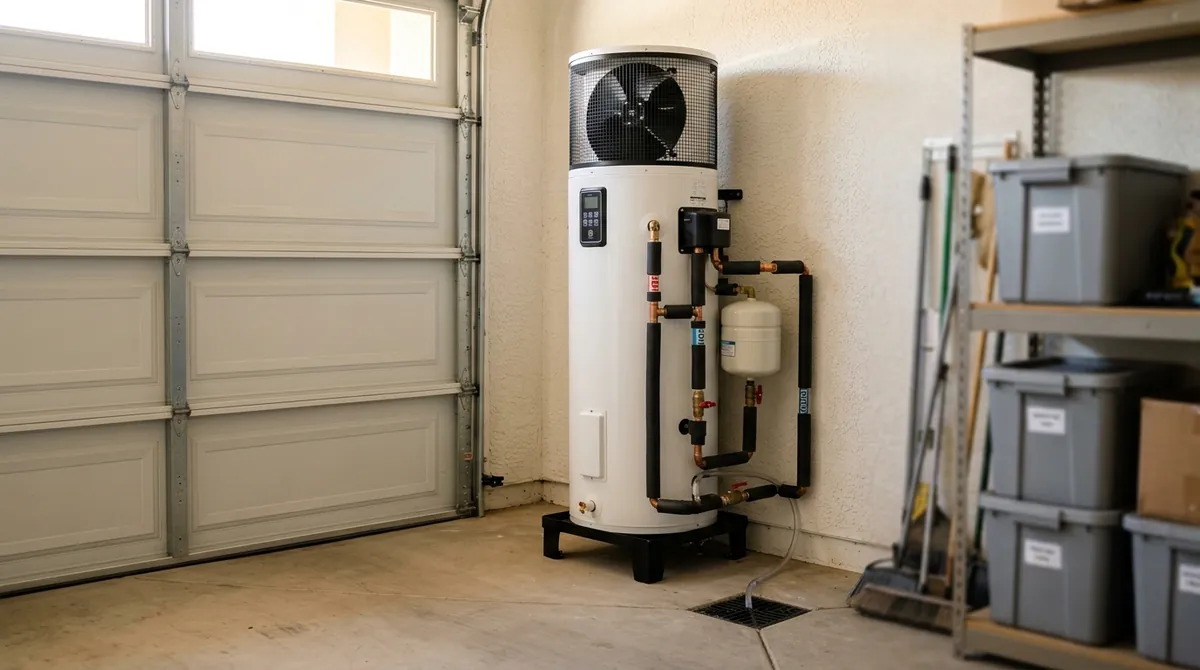
For many Phoenix homes it can be. A heat pump water heater pulls heat from warm air, and a Valley garage has plenty of it for most of the year.
ENERGY STAR notes that "in colder environments with lower incoming water temperature HPWHs may need to go temporarily into a back-up standard electric water heating mode" (ENERGY STAR). Our mild winters mean that happens less here than in most of the country.
A heat pump needs more room than a standard tank, a drain for the water it pulls from the air, and its own circuit. Our heat pump water heater services page and our guide on whether a heat pump water heater is worth it in Phoenix cover the details.
Should You Switch From Gas to Electric, or Electric to Gas?
Most homes can switch either way. Whether it is worth it depends on why you want to.
Switching often makes sense when:
- You are remodeling and the heater is moving anyway.
- You want the heater in a spot where a gas vent cannot go.
- Your household has grown and an electric tank can no longer keep up.
- You want to move to a heat pump water heater.
Staying with what you have often makes sense when:
- The current setup works and the heater just needs replacing.
- Your panel has no room for a new circuit, or there is no gas line nearby.
- You want the quickest, simplest replacement.
Going from gas to electric means a circuit sized for the heater and capping the old gas line safely. Going from electric to gas means a gas supply and venting to the outside. Your city may require a permit, and we will tell you if yours does. Not sure which installer to trust with the job? Our guide on how to choose a water heater installer in Phoenix lists the questions to ask.
Frequently Asked Questions
Is a gas or electric water heater better in Phoenix?
Neither is better for every home. Gas recovers faster and suits larger households. Electric is simpler to install, needs no venting and fits more spaces. For many Valley homes the right answer is to stay with the fuel the house already has, unless there is a clear reason to switch.
Does a gas water heater heat water faster than electric?
Generally yes. A gas burner puts more heat into the water each hour than standard electric elements, so a gas tank refills with hot water sooner after heavy use. A larger electric tank or a heat pump model can narrow the gap.
Can I replace my gas water heater with an electric one?
Usually, yes. You need a dedicated circuit sized for the new heater and room in your panel, and the old gas line has to be capped safely. We check your panel and the space before we quote the job.
How long does a water heater last in Phoenix?
The Air-Conditioning, Heating, and Refrigeration Institute says most water heaters have an expected service life of 10 to 13 years (AHRI). In Valley hard water, yearly flushing helps a tank of either type reach that range.
Talk It Through With the Owners
Tyler and Cameron install gas, electric and heat pump water heaters for homeowners across Phoenix and the Phoenix Valley, Monday to Saturday, 8 AM to 5 PM. We look at your space, your panel and your gas line, then recommend the setup that fits, not the most expensive one.
See our water heater installation services, or our page on water heater installation in Phoenix. Want a second opinion first? Call or text (602) 901-6418 for a free quote by phone, or book a free water heater inspection. No pressure and no obligation, from our family to yours.