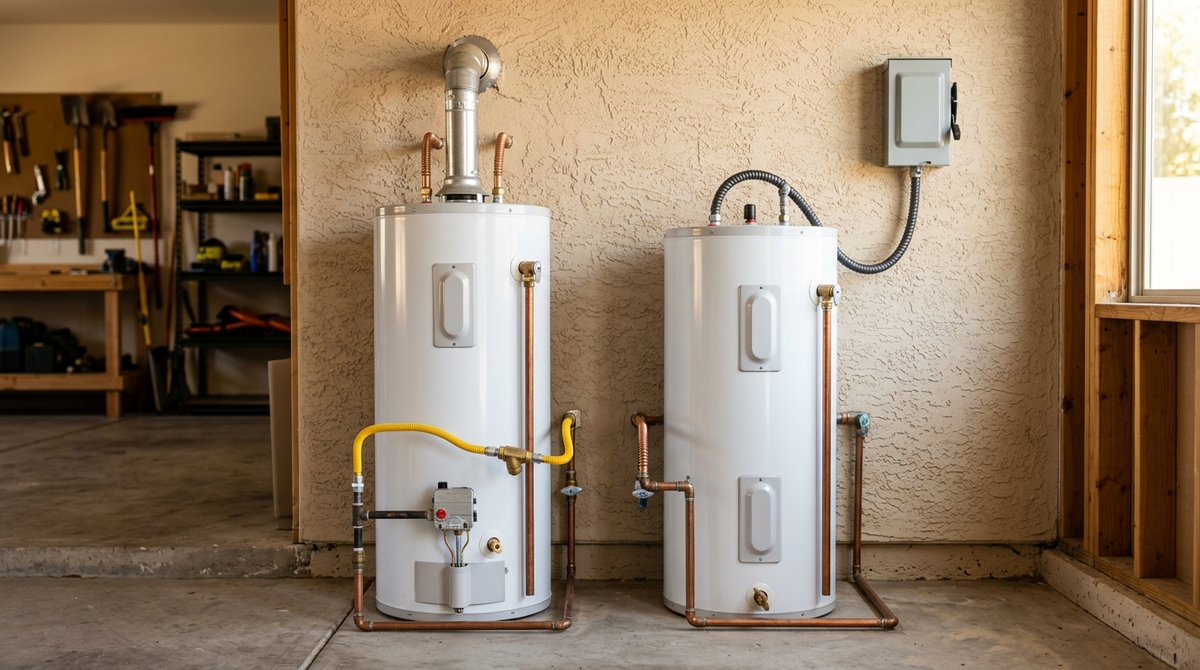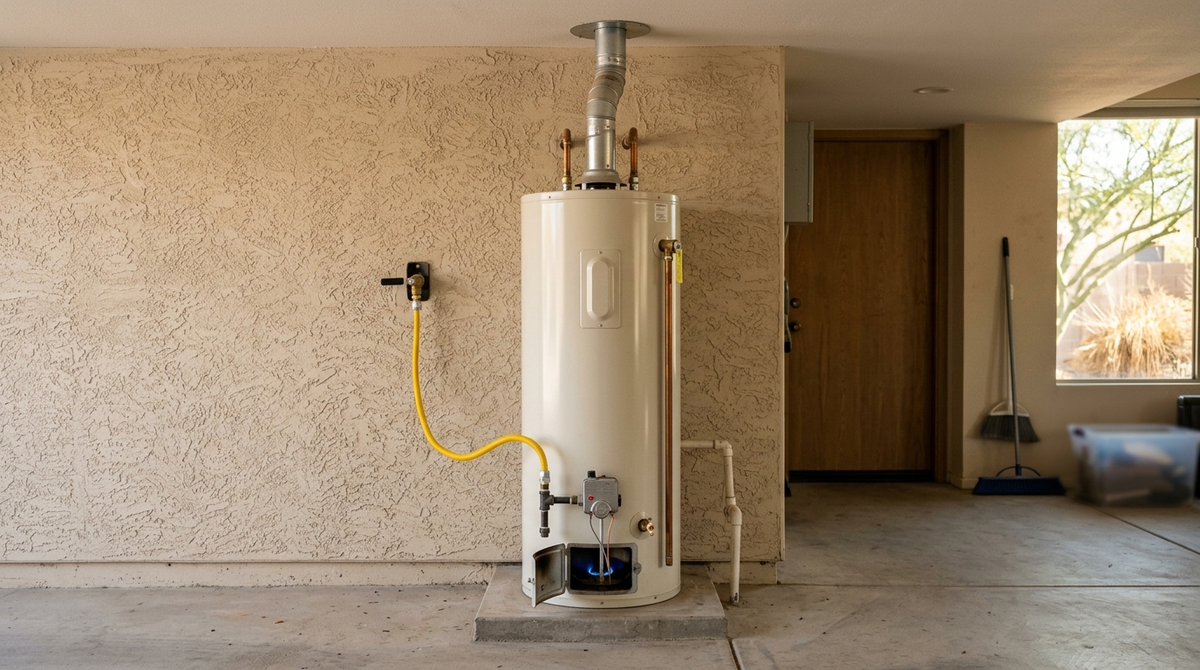
A heat pump water heater is often worth it in Phoenix if you already have an electric water heater and a spot with enough room and airflow for it. It uses warm air to heat water, so it costs far less to run than a standard electric tank, though it costs more up front.
It is not the right fit for every home. This guide covers when a heat pump pays off, when it does not, and what to check before you buy one.
How Does a Heat Pump Water Heater Work?
A standard electric water heater heats water with metal elements, like a big kettle. A heat pump water heater works more like an air conditioner running in reverse.
A fan pulls in warm air from around the unit. The heat pump moves that heat into the water in the tank, then blows out cooler air. The tank still has electric elements as a backup for busy times.
Why does Phoenix suit them?
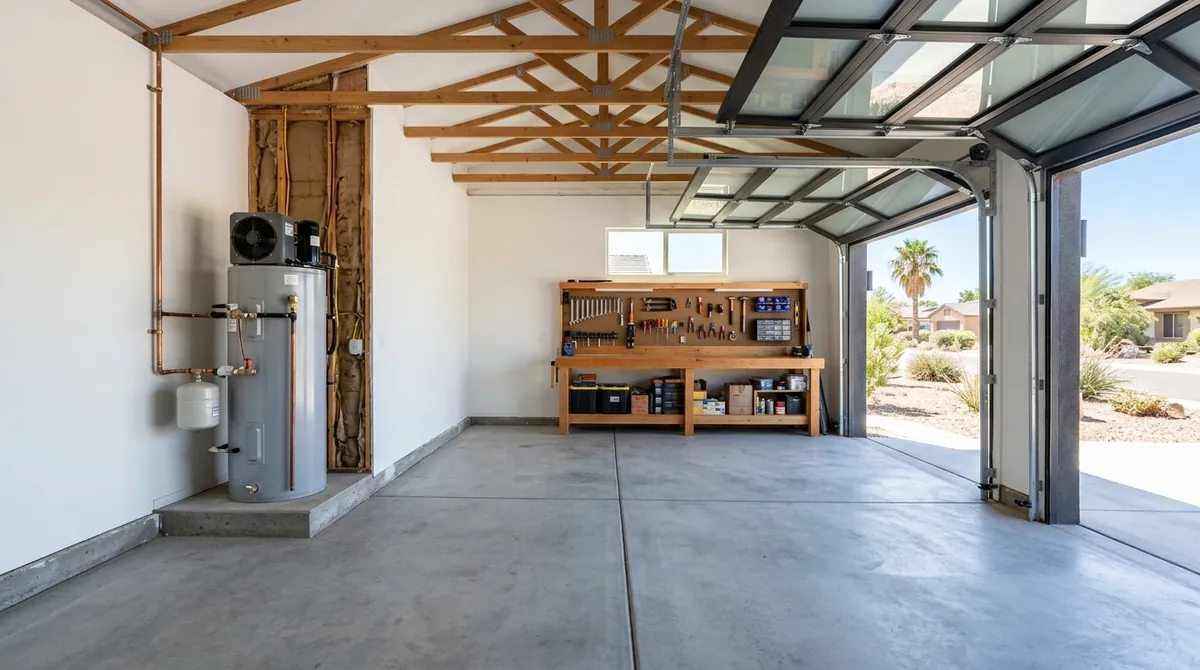
Heat pumps work best in warm air, and Phoenix has plenty of it. Your garage stays warm for much of the year, which gives the unit an easy source of heat.
There is a bonus too. ENERGY STAR notes that a heat pump water heater "can help cool and dehumidify the space it is installed in" (ENERGY STAR). In a hot Phoenix garage, a little cooler air is welcome.
When Is a Heat Pump Water Heater Worth It?
A heat pump makes the most sense when it replaces something that costs a lot to run. Here is where it tends to pay off.
Good signs a heat pump fits your home
- You have an electric tank now. This is the biggest win. Standard electric tanks are costly to run, and a heat pump uses far less power to make the same hot water.
- Your tank is near the end of its life. If you are replacing it anyway, the switch costs less than doing it early.
- You have room around the unit. Heat pumps need airflow, so a roomy garage works well.
- You plan to stay a while. The savings build up over years, so the longer you stay, the more you get back.
- Your family uses a steady amount of hot water. Heat pumps are efficient for normal daily use.
When Should You Skip a Heat Pump?
We would rather tell you no than sell you the wrong heater. A heat pump may not be your best choice in these cases.
Signs a different heater may fit better
- You have gas and like it. A gas tank or tankless unit may make more sense if your home is already set up for gas.
- The only spot is a small closet. Heat pumps need air to work. A tight closet with no venting can starve the unit.
- Your heater just needs a repair. If a new element or thermostat will fix it, a repair may be the smarter move. Our water heater repair services cover all major brands.
- You need the quietest option. The fan and compressor make a low hum, a bit like a fridge. Keep it away from bedrooms.
Where Should a Heat Pump Water Heater Go?
Placement matters more for a heat pump than any other type. It pulls heat from the air, so it needs enough air to work with.
ENERGY STAR says heat pump water heaters "should be installed in interior spaces that remain between 40° to 90° F year-round" and should have "1,000 cubic feet of air space around the water heater" (ENERGY STAR).
What about hot Phoenix summers?
Here is the honest part. Many Phoenix garages get hotter than 90 degrees in summer. Most heat pump models handle this by switching to their backup electric mode when the air is outside their range. That keeps hot water flowing, but it uses more power on those days.
That does not rule out a garage. It does mean the model you choose, and where it sits, both matter. We look at your space and talk through how the unit will run across our seasons.
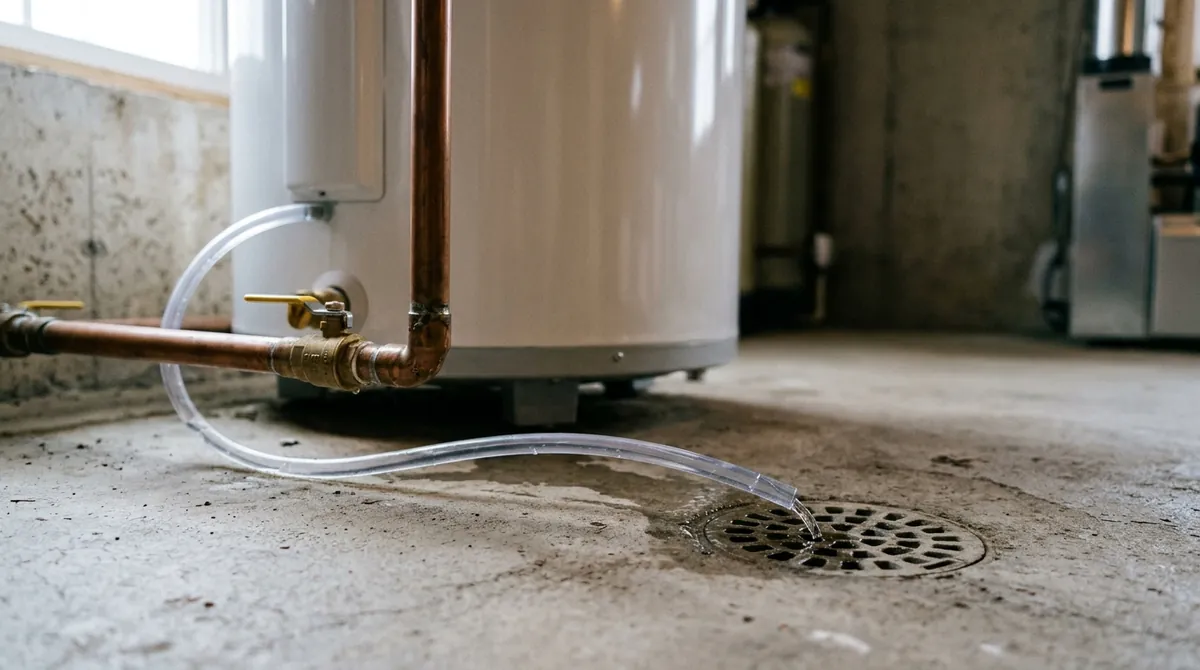
What else does placement need?
- A drain. Heat pumps make water as they cool the air, so they need a condensate line to a drain.
- Height. Most heat pump units are taller than a standard tank, because the heat pump sits on top.
- Clearance. The unit needs space around the top for air to flow in and out.
What Does the Install Involve?
Swapping an electric tank for a heat pump is often simple. Most standard installs take 2 to 4 hours, though every home is different.
What we check before we quote
- Electrical. Many heat pump models run on the same circuit as an electric tank, but we confirm it for your model.
- Space and airflow. We check the room size and the clearance above the unit.
- Condensate drain. We plan where the drain line will run.
- Water lines and code items. We check if your home needs an expansion tank or other updates.
- Permits. The city may require a permit. We will tell you if yours does.
Our heat pump water heater services page explains each step of the install.
How Do the Costs Add Up?
We do not post flat prices, because every home is different. What we can tell you is what moves the number.
A heat pump water heater costs more up front than a standard electric tank. The payback comes from lower power bills over the life of the unit. The bigger your current electric bill for hot water, the faster that happens.
What drives the price
- The model and tank size.
- Any electrical, drain or code work your space needs.
- Haul-away of the old unit.
Are there rebates?
Rebates and offers change often. Ask your utility, APS or SRP, about current rebates on heat pump water heaters before you buy. We can help you understand what the paperwork asks about your new unit.
For a wider look at pricing, see our water heater replacement cost in Phoenix guide.
How Does a Heat Pump Compare to Tankless?
Both are efficient, but they suit different homes. A heat pump is usually the easier switch from an electric tank. A gas tankless unit is often the better fit for a home with good gas service that runs out of hot water.
If you are weighing the two, read our guide to tankless vs tank water heaters in Phoenix.
How Do You Keep a Heat Pump Running Well?
Heat pumps still have a tank, so Phoenix hard water still matters. Minerals settle as sediment at the bottom, just like a standard tank.
- Flush the tank yearly to clear sediment.
- Clean the air filter on top of the unit so air flows freely.
- Check the condensate drain so it does not clog.
- Check the anode rod, or ask about a powered anode rod that does not dissolve.
We recommend annual maintenance in the Phoenix metro because of hard water. See our water heater maintenance services for what a visit covers.
Frequently Asked Questions
Do heat pump water heaters work in Phoenix heat?
Yes. They work best in warm air, which Phoenix has most of the year. On the hottest summer days, many models switch to their backup electric mode when the air is above their range. Hot water keeps flowing, though the unit uses more power on those days. Model choice and placement both help.
Can a heat pump water heater go in my garage?
Often, yes. Garages usually have the room and airflow a heat pump needs. The unit also needs a drain for condensate and space above it for air. We look at your garage first and tell you honestly whether it is a good spot or if another heater fits better.
Is a heat pump better than a gas water heater?
It depends on your home. A heat pump is usually the best upgrade from an electric tank. If your home already has good gas service, a gas tank or tankless unit may make more sense. We will compare the options for your setup and explain the trade-offs before you decide.
Are heat pump water heaters noisy?
They make a low hum from the fan and compressor, a bit like a fridge. In a garage, most people barely notice it. If the only spot is near a bedroom or living area, the sound may bother you. We help you pick a spot that keeps noise out of the way.
Talk to the Owners Before You Buy
Not sure if a heat pump fits your home? Tyler and Cameron will look at your space, your power and how your family uses hot water. If a heat pump is not the right call, we will tell you, and explain what is.
We serve homeowners across the Phoenix Valley, Monday to Saturday, 8 AM to 5 PM. If you live in Phoenix, see our page on heat pump water heaters in Phoenix.
Call or text (602) 901-6418 for a free quote by phone, or book a free water heater inspection. No pressure and no obligation, from our family to yours.