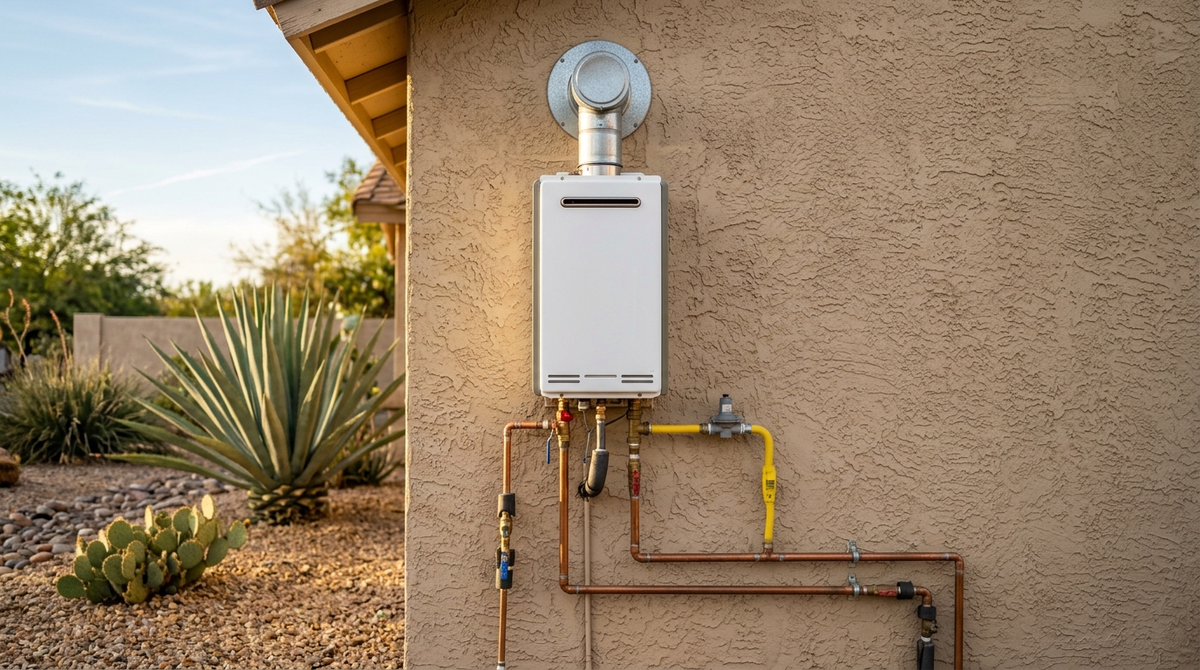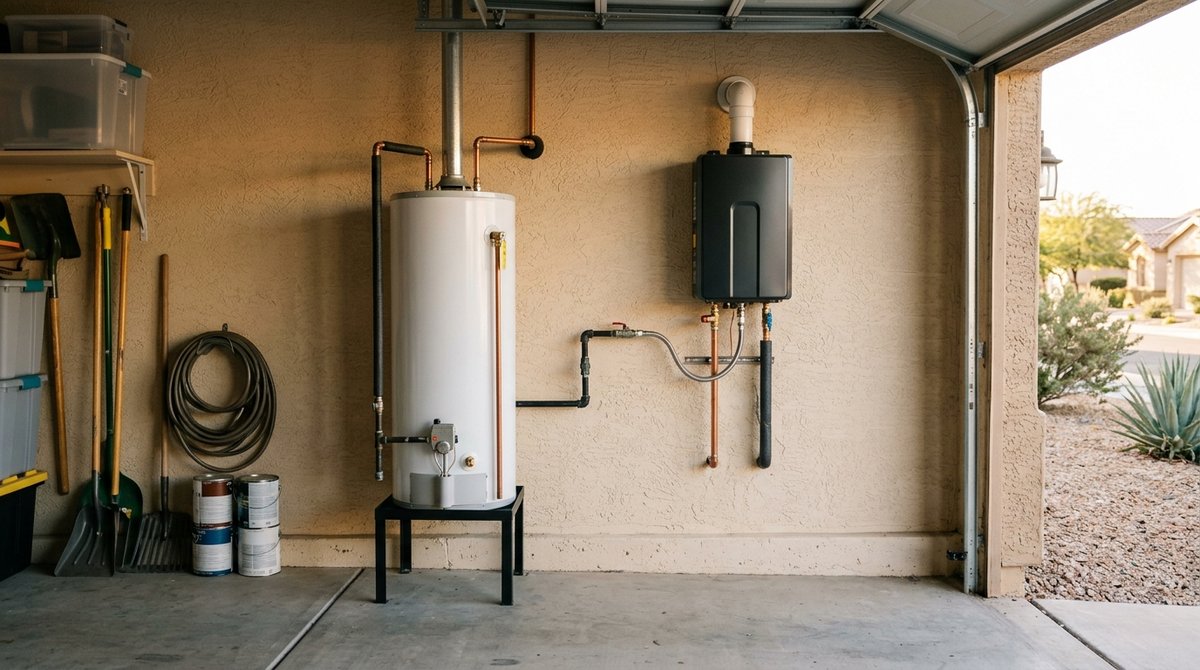
A Rinnai tankless heater that needs repair usually tells you with a code on the display. In Phoenix hard water the one to expect is LC, which means scale has built up inside the heat exchanger and the unit needs a flush.
Codes 10, 11 and 12 point to air, ignition or flame problems, and most of them come down to one part or one blocked path, not a new heater.
This guide covers what those codes mean, what you can safely check before you call, and when a repair is worth it. We repair all major brands, Rinnai included, and the code is the first thing we ask about when you call or text.
How Does a Rinnai Tankless Heater Tell You Something Is Wrong?
A tankless water heater checks itself every time it fires. When something is off, it shows a number or letters on the temperature controller, the small panel inside your home or on the unit itself. Rinnai calls these diagnostic codes.
Write the code down before you do anything else. It tells us where to start, and it often saves a second trip. The same code can have more than one cause, so treat it as a clue, not a verdict.
A few quick checks are safe for any homeowner:
- Is the gas turned on at the meter and at the heater's gas valve?
- Is the water supply valve under the unit fully open?
- Is the power on? Many units plug into an outlet that can trip with the garage circuit.
- Has anything been stacked against the unit or the vent outside?
If you smell gas at any point, stop. Leave the house and call your gas company or 911 from outside.
What Does the LC Code Mean on a Rinnai?
LC is the code Valley hard water causes. Rinnai's own troubleshooting manual says LC, 00 or LC0 to LC9 "indicates that there is a scale build-up in the heat exchanger and that it needs to be flushed to prevent damage" (Rinnai diagnostic codes manual). The same manual says hard water must be treated to prevent scale build-up or damage to the heat exchanger.
Valley water is hard, so minerals coat the inside of the heat exchanger a little more every time hot water runs. Over a year or two that coating slows heat transfer, and the unit flags it.
Can you keep using it?
On many models, yes, for a short time. The manual explains that LC codes are the only codes that let the heater keep running, and that newer units allow a temporary reset that buys about 70 hours before the code locks the heater out again. The number after LC counts how many times it has been reset without a flush.
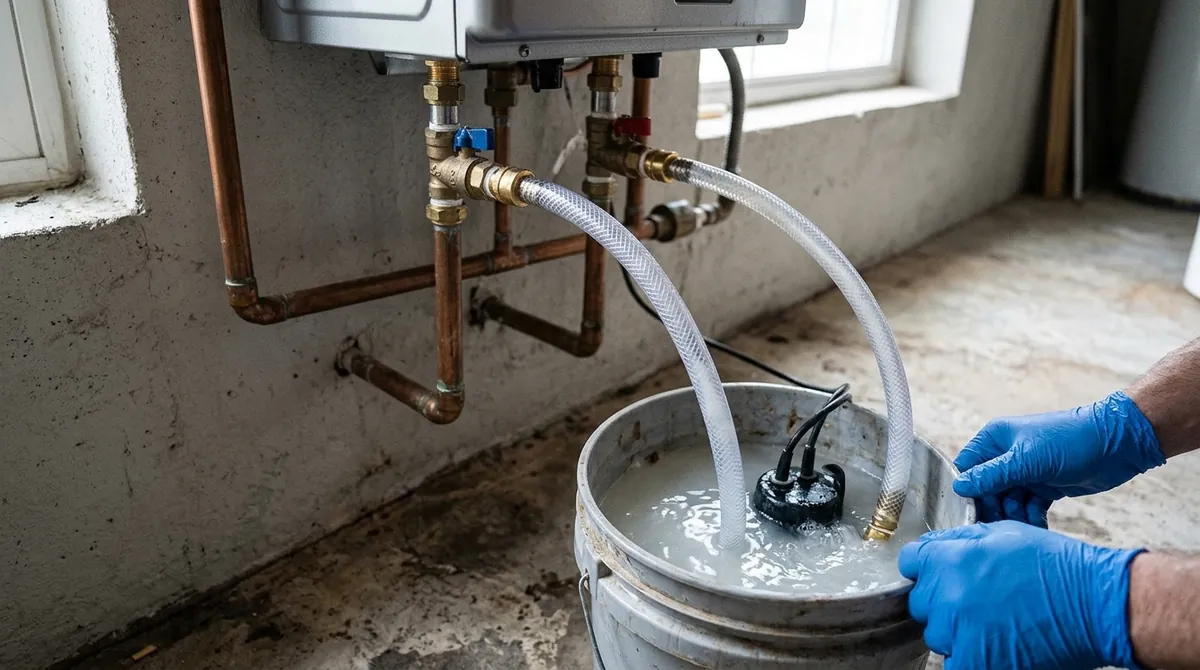
A reset is a stopgap. The fix is a descale, which means pumping a descaling solution through the heat exchanger to dissolve the minerals. When we descale a tankless unit, we also clean the built-in water filter and air filter and look for anything else worth fixing.
What Do Codes 10, 11 and 12 Mean?
These three are about air and fire. Each one has a pattern.
Code 10: air supply or exhaust blockage
Rinnai lists code 10 as "Air Supply, Exhaust Blockage or Condensate Trap is Full." The heater cannot pull in enough air or push out its exhaust.
On outdoor units mounted on Phoenix stucco walls, dust, leaves, insects and nests in the vent are common reasons. On condensing models, a full or blocked condensate line can trigger it too.
What you can do: look at the vent outside and clear anything sitting in front of it. Do not take vent pipe apart. Venting length, materials and clearances are set by the installation manual, and a mistake there causes exhaust problems.
Code 11: no ignition
Code 11 means the unit tried to light and could not. Rinnai's first checks are simple: are all gas valves open, was air purged from the gas line after the install, and is the gas pressure at the heater high enough? A gas valve left partly closed after other work in the house is a common cause.
Code 12: flame failure
Code 12 means the burner lit, then lost its flame. Rinnai's manual points to gas supply, low inlet gas pressure, and loose or dirty parts on the burner, such as the flame rod and spark electrode. Low pressure often shows up when the heater and other gas appliances run at once, because the gas line to the heater is too small for the load.
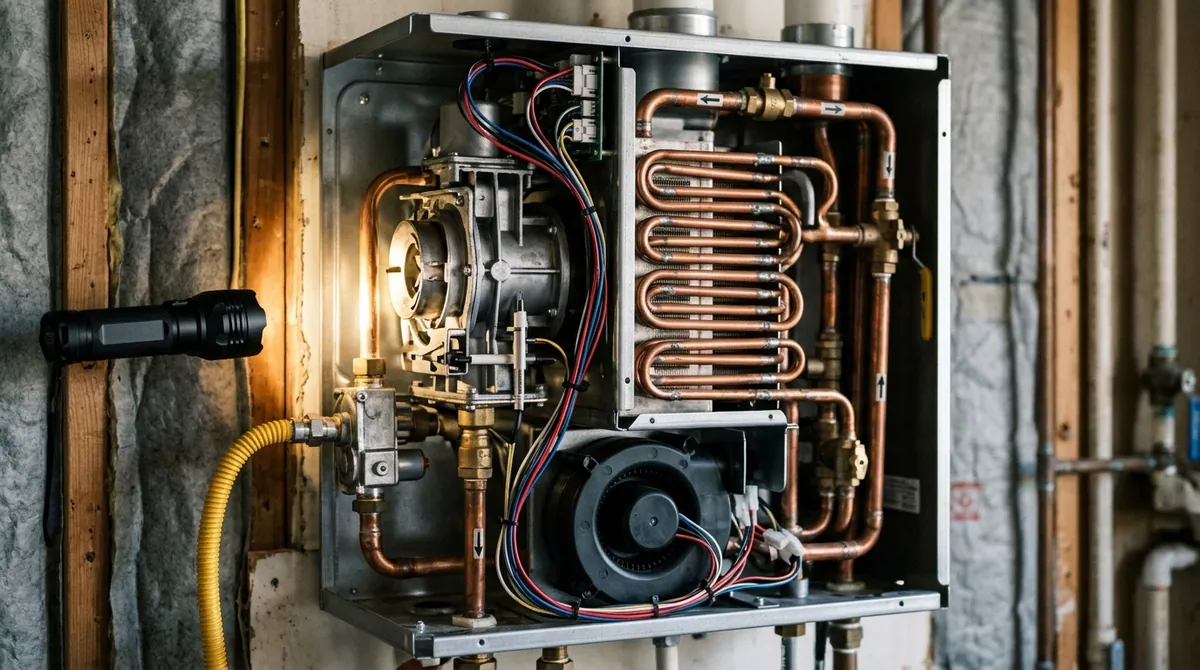
Checking gas pressure and cleaning or replacing burner parts means opening the unit and working on the gas system. That is work for a licensed pro, not a weekend job.
What About Codes 14, 16 and 79?
These are less common, but they matter.
- Code 14 comes from the overheat sensor or thermal fuse. Rinnai's manual says it "should be taken seriously." Scale is one possible cause, because a coated heat exchanger runs hotter.
- Code 16 means the outgoing water got too hot and the unit shut itself down for safety.
- Code 79 means the unit's leak sensor found water inside the cabinet. Turn off the water to the heater and call.
With any of these, do not keep resetting the unit to make the code go away. Each one is a safety shutdown doing its job.
Repair or Replace a Rinnai Tankless Unit?
Most code repairs are worth doing. A descale, a cleaned flame rod, a new igniter or a fixed vent costs far less than a new unit, and a well-kept tankless heater can run for many years.
Repair usually makes sense when:
- The code is LC and the unit has never been descaled
- The fix is one part, such as a sensor, igniter or fan
- The heat exchanger has no leaks or cracks
Replacement may be the better call when:
- The heat exchanger itself is leaking or badly damaged
- The unit keeps throwing codes after repairs
- It is undersized for your home and has never kept up
If you are weighing a new unit, our page on tankless water heater installation explains sizing, venting and gas line needs. We tell you which way we would go and why, with clear pricing before any work starts.
How Do You Keep the Codes From Coming Back?
In Phoenix hard water, the answer is a yearly descale. We recommend it for every tankless unit in the Valley, Rinnai or otherwise, because scale starts building from the first day. Cleaning the inlet water filter and the air filter at the same visit keeps flow and airflow where they should be.
A water softener or scale treatment can slow the buildup. Our guide to protecting your water heater from Phoenix hard water covers the pros and cons honestly. For other warning signs, such as hot and cold bursts or weak flow, see tankless water heater problems in Phoenix.
Frequently Asked Questions
Why does my Rinnai keep showing LC?
LC means scale has built up in the heat exchanger. Resetting the unit only clears the code for a while, and it comes back until the heat exchanger is flushed. In Phoenix hard water, a yearly descale keeps it from returning so often.
Can I reset a Rinnai tankless water heater myself?
You can turn the power off and on, and many models allow a short temporary reset for the LC code. Repeated resets will not fix the cause. If a gas or overheat code returns after one reset, stop and call for repair.
Do you repair Rinnai tankless water heaters?
Yes. We repair all major brands, including Rinnai, across Phoenix, Tempe, Paradise Valley and the rest of the Phoenix Valley. Call or text the code and the model with a photo of the label, and we can often tell you what to expect before we come out.
How often should a Rinnai tankless be descaled in Phoenix?
We suggest once a year. Valley water is hard enough that scale builds steadily, and Rinnai's own manual ties the LC code to scale in the heat exchanger. Check your owner's manual too, since some warranties expect regular maintenance.
Talk to the Owners About Your Code
Tyler and Cameron handle every tankless repair and descale themselves, Monday to Saturday, 8 AM to 5 PM. We tell you honestly whether a repair makes sense, and we never push a new unit when a part will do.
See our tankless water heater repair and descaling service, or the local pages for tankless water heater repair in Phoenix and tankless water heater repair in Tempe. Got a code on the screen right now? Call or text (602) 901-6418 for a free phone consultation, or book a free water heater inspection. No pressure and no obligation, from our family to yours.
The Water Heater Bros are an independent company and are not affiliated with Rinnai. Rinnai is a trademark of its owner.