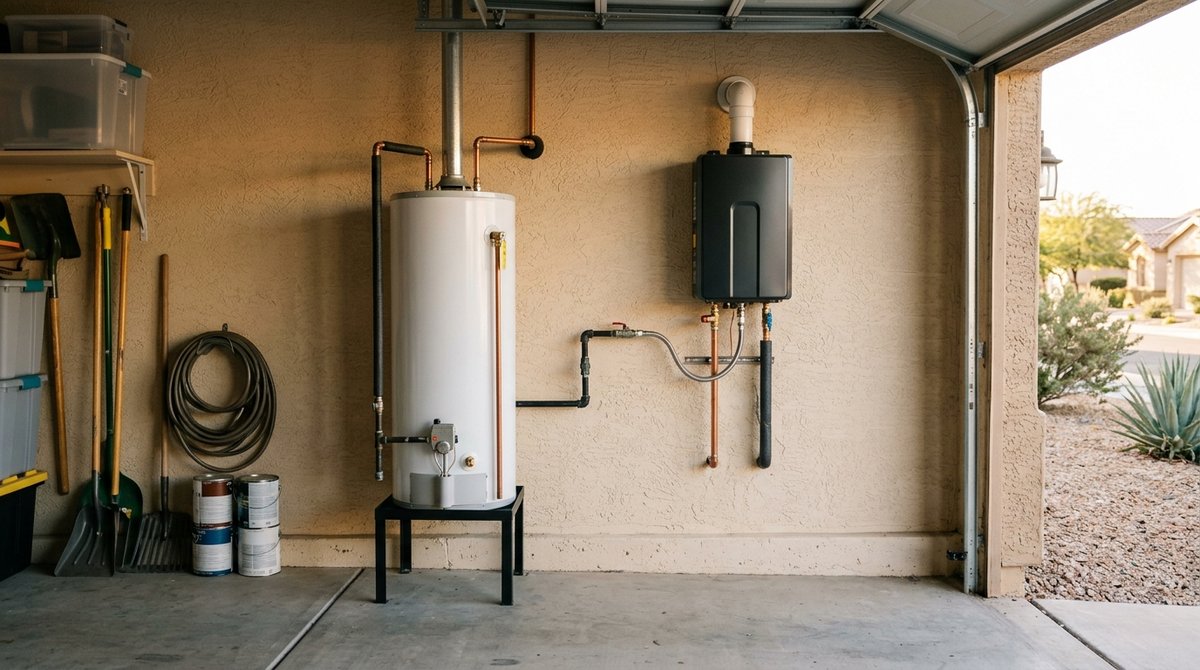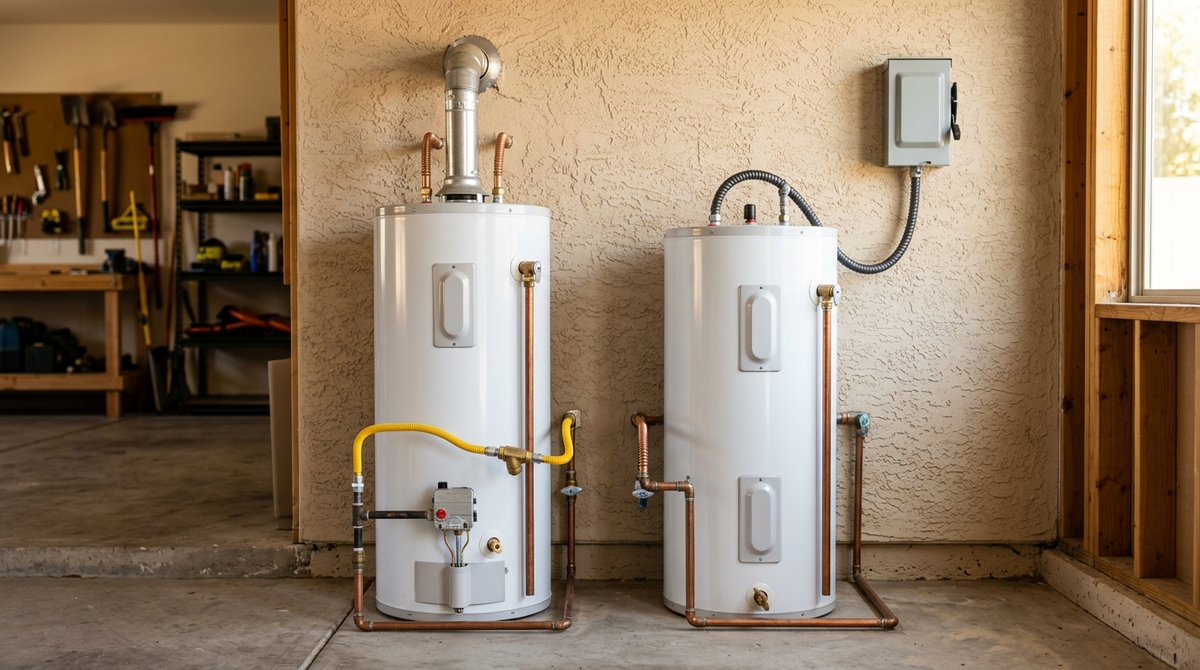
Most tankless water heater problems in Phoenix trace back to one cause: scale from our hard water building up inside the heat exchanger and filters. Error codes, hot and cold swings, weak flow and slow heat-up are the usual signs, and many of them clear up with a descaling and filter cleaning rather than a new part.
Some problems do need a repair, and a few mean the unit is near the end. This guide walks through the signs we see most often in Valley homes, what each one usually means, and what you can check before you call.
Why Do Tankless Water Heaters Have Problems in Phoenix?
A tankless unit heats water as it flows through a narrow heat exchanger. The water gets very hot, very fast. Phoenix-area water carries a lot of dissolved minerals, and that heat makes them settle out as scale on the inside of the exchanger.
Scale builds up a little at a time. At first you notice nothing. After a year or two without descaling, the passages narrow, the unit works harder and the display starts throwing codes.
Summer adds its own strain. Many Valley homes have the tankless unit on an outside wall or in a garage that stays hot for months. Heat is hard on electronic parts, seals and sensors, so a yearly check catches wear before it leaves you with a cold shower.
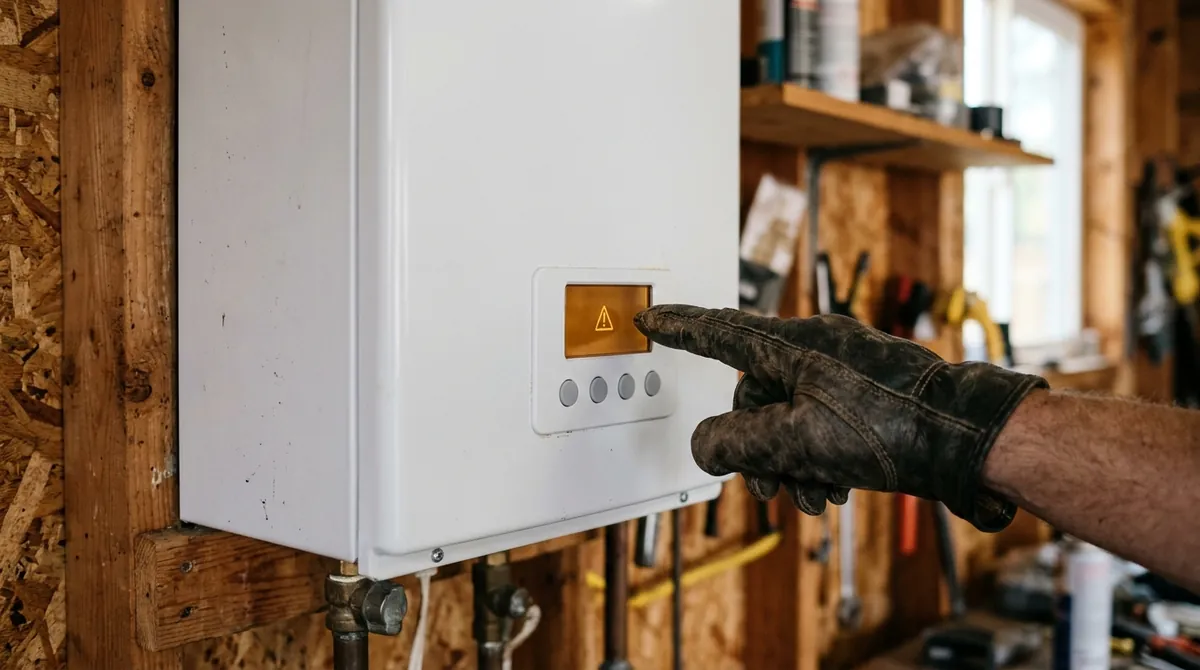
Sign 1: An Error Code Is Flashing on the Display
Every tankless brand uses its own codes. A code is the unit telling you which system it is unhappy with. The most common groups we see are:
- Scale or overheating codes. The unit senses the exchanger is running too hot because scale is trapping the heat.
- Ignition or flame codes. On gas units, the burner did not light or the flame went out. Gas supply, a dirty burner or a worn igniter can cause it.
- Airflow or venting codes. A blocked vent, a dirty air filter or a bird nest in the termination cap.
- Flow or temperature sensor codes. The unit cannot read how much water is moving or how hot it is.
Write down the code and the brand before you reset anything. Some codes clear on a reset and come straight back, and the pattern helps us find the cause.
What you can check first
- Make sure the gas valve to the unit is fully open.
- Check that nothing is blocking the vent outside.
- Clean the built-in air filter if your model has one and you can reach it safely.
- Reset the unit once by turning the power off and on.
If the same code returns, text Tyler or Cameron the code and the brand. Many codes point us in the right direction before we arrive.
Sign 2: Water Turns Hot, Then Cold, Then Hot Again
This is sometimes called a cold water sandwich. You turn on the shower, get hot water, then a burst of cold, then hot again.
A short burst of cooler water right after someone else used the tap can be normal with tankless. The unit stops when the tap closes and needs a moment to fire again. If the swings happen in the middle of a shower, something else is going on. Common causes are:
- Scale on the heat exchanger, so the unit overheats, shuts the burner down, then restarts.
- A clogged inlet water filter that lets flow drop below what the unit needs to stay lit.
- A flow sensor that is not reading correctly.
- A gas line that cannot feed the burner at full demand.
The first two are often fixed with descaling and a filter cleaning. A sensor or gas supply issue needs a closer look.
Sign 3: Hot Water Flow Is Weaker Than It Used to Be
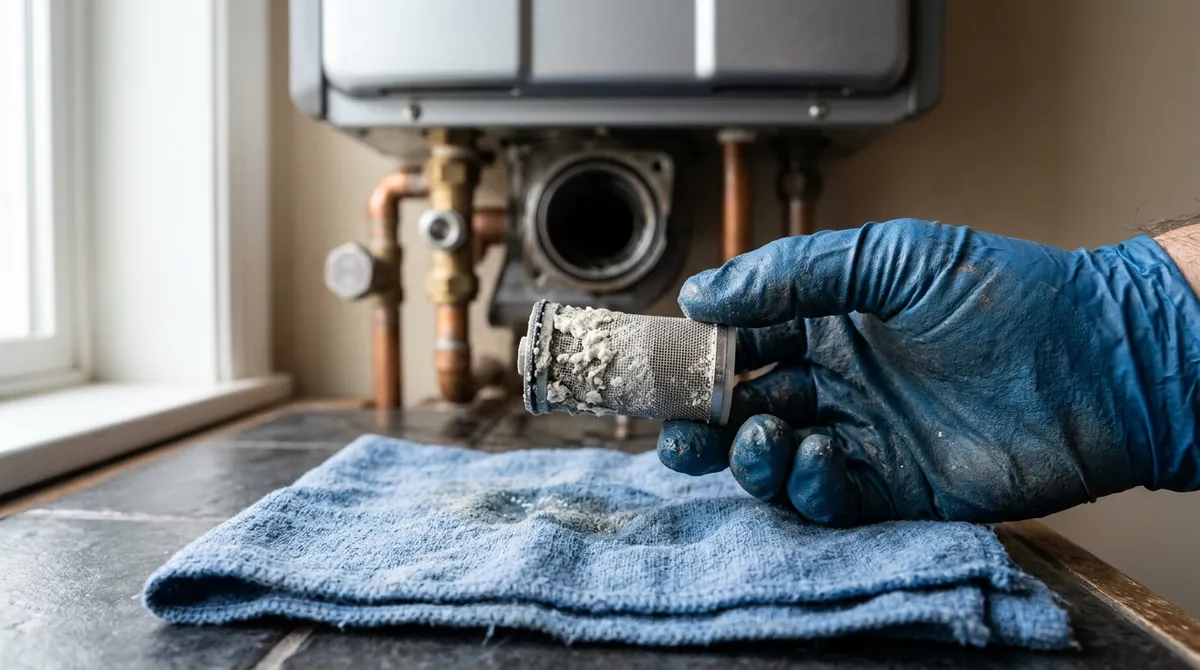
If every hot tap in the house is weaker than the cold, the problem is usually at the heater. Scale narrows the passages in the exchanger, and the inlet water filter catches grit and mineral flakes until water struggles to get through.
If only one faucet or shower is weak, the problem is more likely that fixture's aerator or shower head. Hard water clogs those too. Unscrew and soak them in white vinegar before you call anyone.
Sign 4: The Unit Will Not Fire at Low Flow
A tankless heater only turns on when it senses enough water moving. If you open a hot tap just a little and the water stays cold, the flow may be below the unit's minimum.
Open the tap further. If the water then heats up, the unit is working as designed. If it still will not fire, or it only fires at full flow, the flow sensor may be dirty or failing. Scale and debris can also keep the sensor from reading flow properly.
Sign 5: Water Takes Longer to Get Hot
A tankless unit should bring water up to temperature quickly once it fires. The wait at the tap also depends on how far the faucet is from the heater, so a far bathroom always takes longer.
If the wait has grown over the months, scale is the usual suspect. Mineral buildup acts like insulation on the exchanger, so heat moves into the water more slowly. A descaling often brings the heat-up time back.
Sign 6: It Has Been Over a Year Since the Last Descaling
This is not a symptom, but it is the most common reason behind the five above. In the Phoenix Valley we suggest descaling every year.
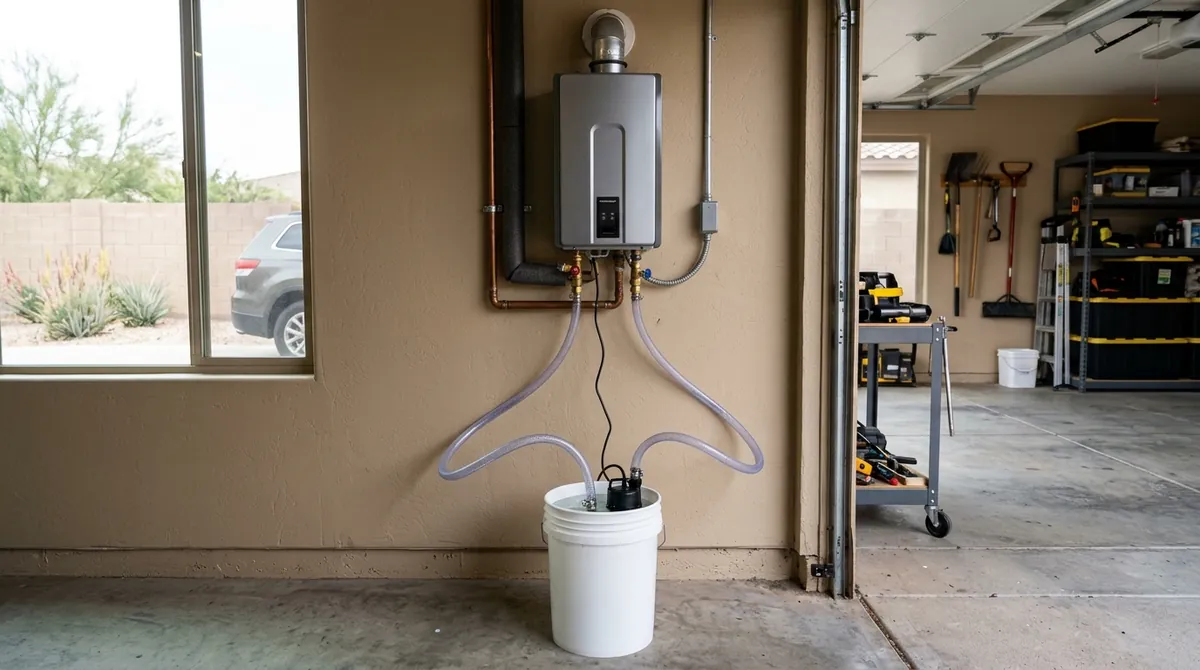
A descaling visit takes about an hour. We connect hoses to the unit's service valves, pump an environmentally friendly descaling solution through the exchanger to dissolve the scale, then flush it with clean water. We also clean the inlet water filter and the built-in air filter.
Our tankless water heater repair and descaling services page explains each step and what affects the price.
Repair or Replace a Tankless Unit?
Tankless units are built to last. ENERGY STAR notes that tankless water heaters "have a life expectancy of 20 years, much longer than any conventional tank-type water heater" (ENERGY STAR).
That long life is why repair is usually worth a look first. In our hard water, though, a unit that went years without descaling may never reach it. Here is how we weigh the call.
Repair usually makes sense when:
- The problem is scale or a clogged filter, and a descaling clears it.
- One part has failed, such as a flow sensor or igniter, and the rest of the unit is in good shape.
- The unit is still well inside its expected life.
Replacement may make more sense when:
- The heat exchanger is leaking or badly damaged by scale.
- Several parts are failing at once on an older unit.
- Parts for your brand or model are hard to get.
- Your household has grown and the unit cannot keep up with the hot water you need now.
We will tell you honestly which side your unit falls on. Many heaters do not need replacing when they act up, and sometimes a simple repair is the better choice. If you are weighing a new unit, our guide to signs you need water heater replacement in Phoenix covers the bigger picture.
How Can You Prevent Tankless Problems?
Most of the problems above are cheaper to prevent than to fix. A few habits keep a tankless unit healthy in Valley water:
- Descale every year. This is the single biggest thing you can do.
- Clean the inlet water filter. It sits where cold water enters the unit and catches debris.
- Keep the vent clear. Check the outside vent cap for nests, weeds or anything stacked against it.
- Ask about service valves. If your unit was installed without them, isolation valves on the water lines make yearly descaling much quicker.
- Do not ignore a code. A code that keeps coming back is an early warning, not a nuisance.
If you also have a tank water heater, our water heater maintenance services cover flushing, anode rod checks and inspections for both types.
Frequently Asked Questions
Why does my tankless water heater keep going cold?
In the Phoenix Valley, the most common cause is scale from hard water. It makes the unit overheat and shut the burner off, then restart. A clogged inlet filter, a dirty flow sensor or a gas supply that cannot keep up can also cause it. Descaling and a filter cleaning fix many cases.
How often should a tankless water heater be descaled in Phoenix?
We suggest every year. Phoenix-area water is hard, and scale starts building as soon as the unit is installed. Yearly descaling keeps flow strong, cuts down on error codes and helps the unit reach its full life. Check your manufacturer's guide too, since some warranties expect regular maintenance.
Can I descale a tankless water heater myself?
Some homeowners do, using a pump, hoses and a descaling solution through the service valves. If your unit has no service valves, or you are not comfortable working near gas and electrical connections, it is safer to have it done. We also clean both built-in filters and check for other wear while we are there.
Is it worth repairing an old tankless water heater?
Often yes, because tankless units are built for a long life. If the problem is scale or a single part and the exchanger is sound, a repair usually makes sense. If the exchanger is leaking or several parts are failing, replacement may be the better value. We will explain the trade-off before you decide.
Get a Straight Answer From the Owners
Tyler and Cameron repair and descale tankless water heaters for homeowners across Phoenix and the Phoenix Valley, Monday to Saturday, 8 AM to 5 PM. We find the real cause first, and if a cleaning solves it, that is what we recommend.
If you live in Phoenix, see our page on tankless water heater repair in Phoenix. Stuck on an error code? Call or text (602) 901-6418 with the code and brand for a free phone consultation, or book a free water heater inspection. No pressure and no obligation, from our family to yours.